Local type
Distinguishes whether the eclipse is total, annular, partial or outside the useful observing zone from that point.
A high-level explanation: precise astronomy, real terrain and a score designed to compare observing locations.
We calculate the relative position of the Sun and Moon for each moment and location. That gives the local eclipse type, contacts, magnitude, obscuration and central-phase duration.
We use digital elevation models to estimate which part of the sky is visible from the observing point and which terrain obstacles appear in each direction. Trees, buildings and other artificial structures are not included.
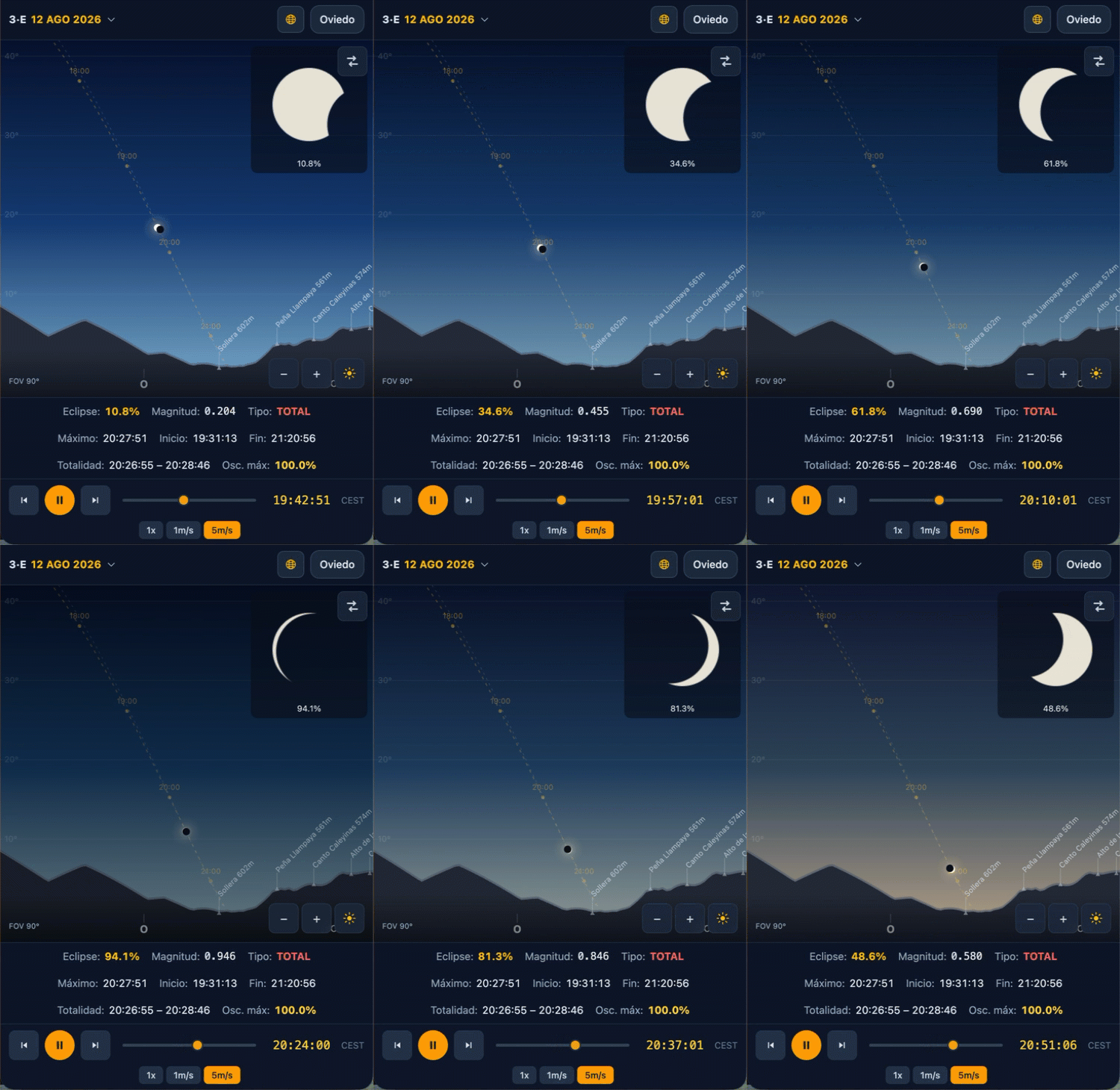
We cross-check the Sun and Moon path against the horizon profile. This helps detect whether a mountain could block the Sun during maximum eclipse or before totality.
The result is summarized as a score from 0 to 100. It is a guide for comparing places, not a guarantee of weather, access or safety.
The horizon view helps you understand how the Sun and Moon will move from that exact point and which moments deserve extra attention.
From map to horizon
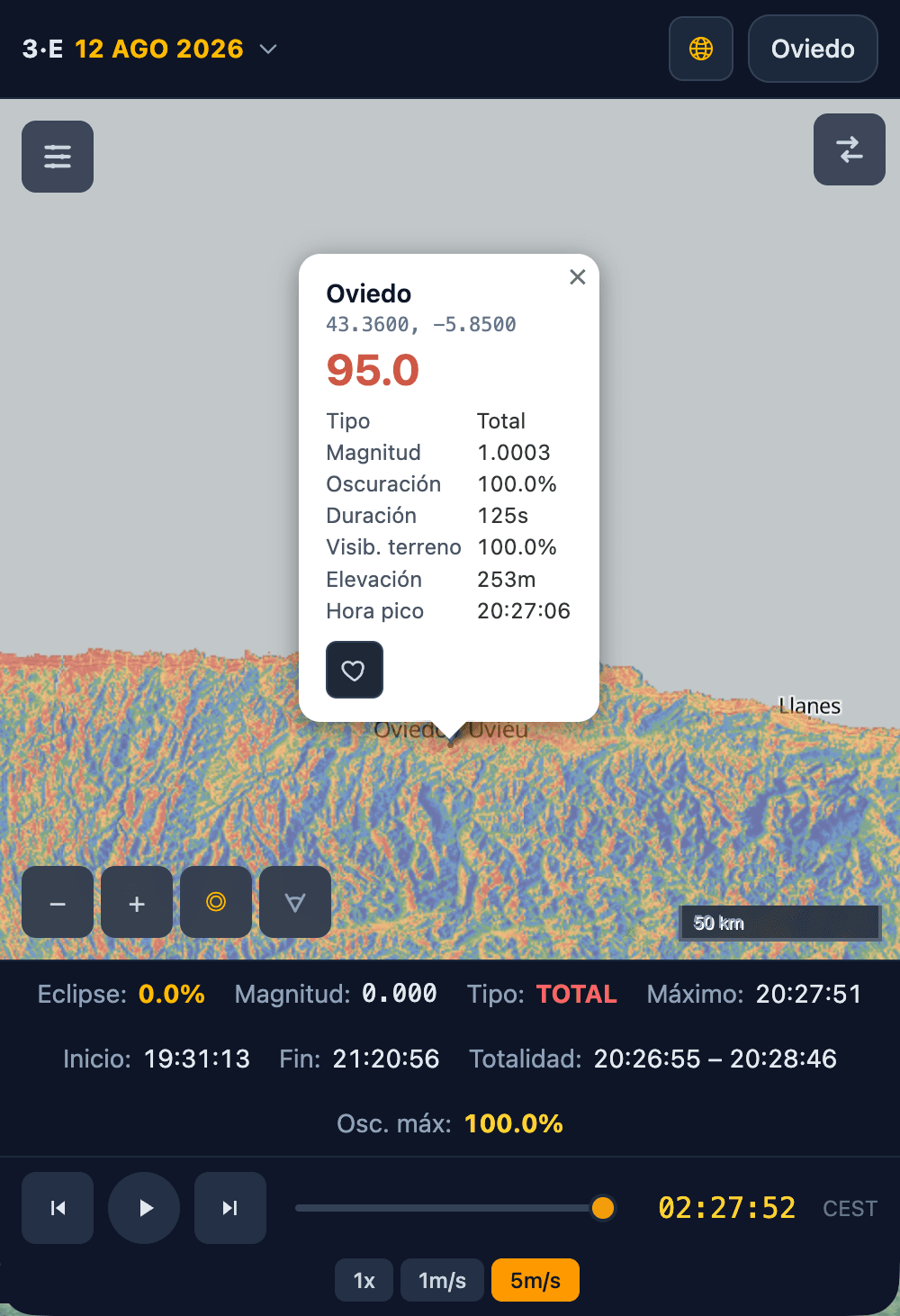
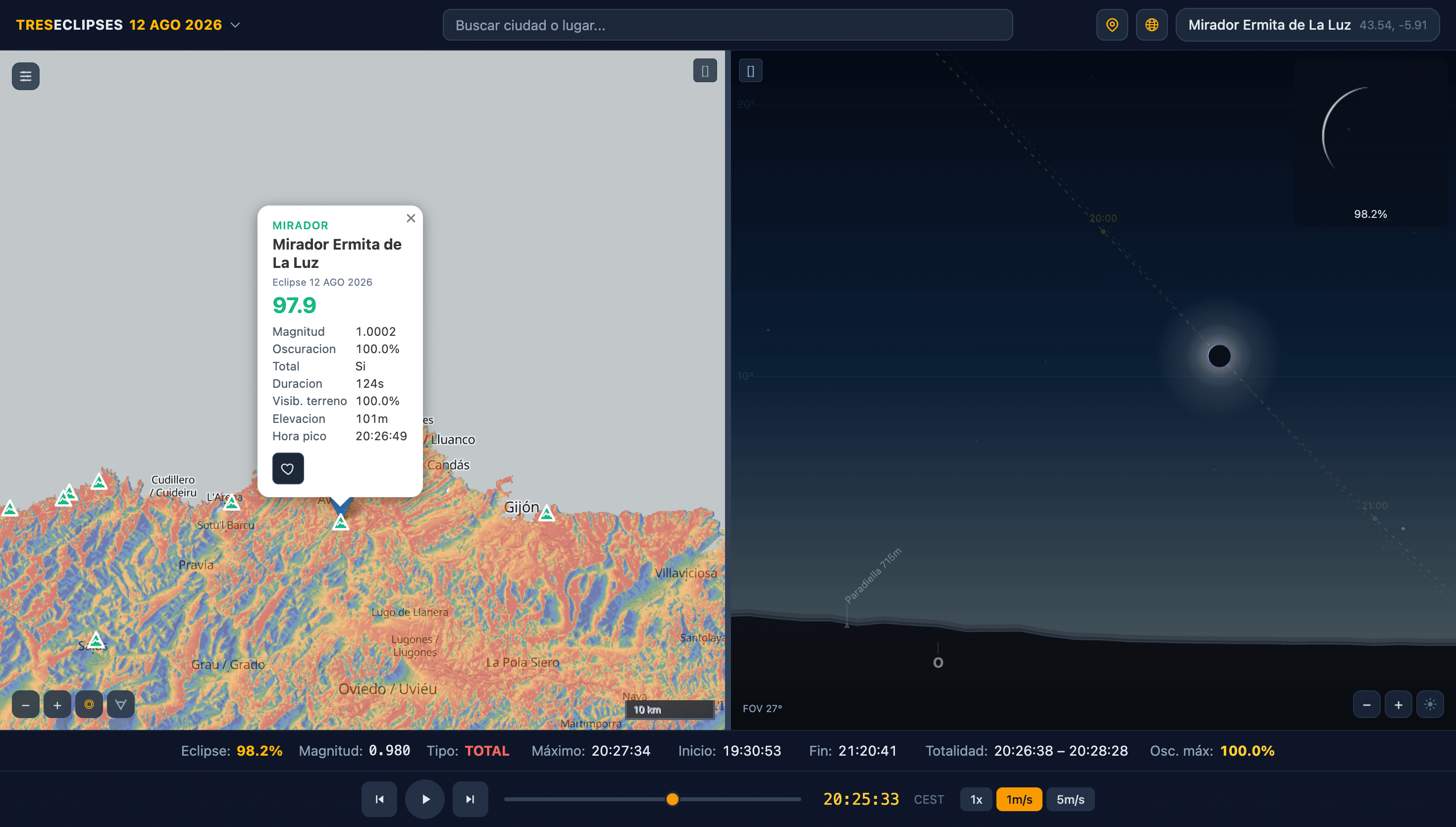
First you compare areas with the score map. Then you drop down to the horizon profile to see whether the Sun is actually clear at the important moments of the eclipse. On large screens you can view both side by side. On smaller screens you can switch between them with the two-arrow button at the top right.
Viewpoints
The simulator shows the ten viewpoints with the best score inside the area you are viewing. You can open each one to compare score, totality duration, obscuration and terrain visibility, and save the places you care about for eclipse day.
What goes into the score
The score does not decide for you. It reduces a complex situation to a clear signal so you can choose, compare and prepare alternatives.
Distinguishes whether the eclipse is total, annular, partial or outside the useful observing zone from that point.
Evaluates how long the central phase lasts when totality or annularity exists.
Takes magnitude and obscuration into account: how much of the solar disk is covered by the Moon.
Cross-checks the Sun path with mountains and relief to estimate whether the key moments will be visible.
Before travelling, check the weather forecast, access, permissions, road safety and real conditions at the site. TresEclipses helps you choose better, but it does not replace on-the-ground planning.